Food and Beverage Exhibition Stall Design: Attract Buyers and Build Brand Appetite
Food and beverage exhibition stall design works best when it combines strong visual branding with sensory experience. The most effective food and beverage stalls use sampling stations, product display zones, appetite-stimulating colours and lighting, and clear buyer-focused messaging to attract footfall, drive engagement, and convert visitors into serious business leads.
Why Food and Beverage Exhibition Stall Design Needs a Different Approach
Food and beverage trade shows are unlike almost any other exhibition environment. Events like Annapoorna World Food Fest, World Food India, Fine Food India, and Foodex attract a specific kind of visitor. Retail chain buyers, hotel procurement managers, food service distributors, franchise operators, and export consultants walk these floors with a very particular mindset.
They are not there to browse. They are there to source.
This changes what your stall needs to do. A food and beverage exhibition stall design does not just need to look attractive. It needs to do something that almost no other industry stall has to do. It needs to stimulate appetite, build product trust, and communicate commercial viability all at the same time.
A buyer standing at your stall is asking three questions simultaneously. Does this product taste good enough to sell? Does this brand look credible enough to partner with? And can this company supply consistently at the scale I need? Your food and beverage exhibition stall design needs to answer all three of those questions before the buyer opens their mouth.
Furthermore, the competition at food and beverage trade shows is intense. Hundreds of brands compete for the attention of the same pool of buyers. The stalls that attract serious buyer conversations are never the ones with the most products on display. They are the ones with the clearest brand identity, the most inviting sensory experience, and the most purposeful layout.
What Works in Food and Beverage Exhibition Stall Design
Sampling Stations That Tell a Brand Story
Sampling is the most powerful tool in food and beverage exhibition stall design. No amount of packaging design, product photography, or brand copy can replace the experience of actually tasting a product. However, most exhibitors set up a simple plate of samples on a counter and call it a sampling station. That is not enough.
Design the Sampling Experience
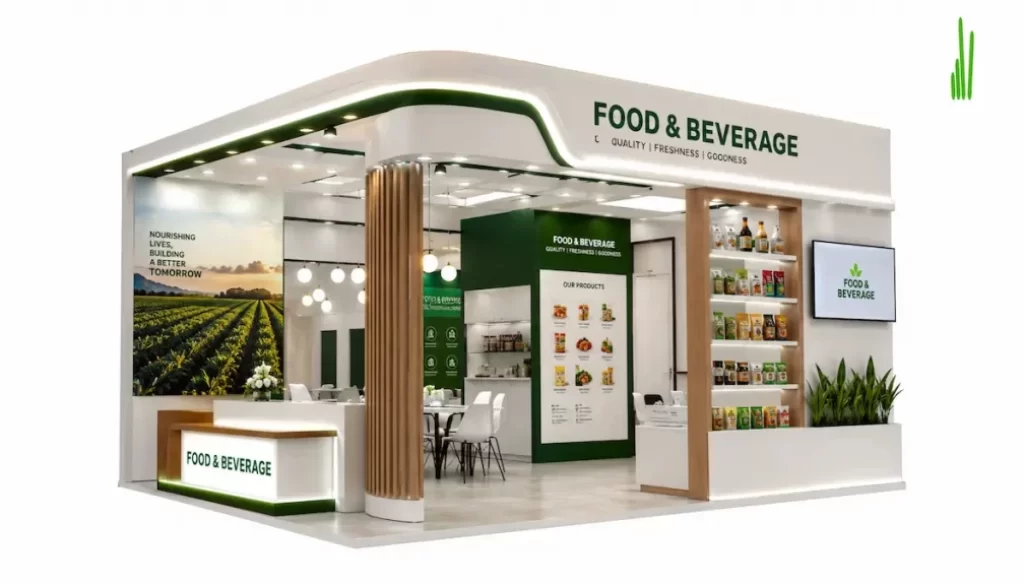
A well-designed sampling station does more than offer a taste. It contextualises the product. If you make premium organic snacks, your sampling station should feel premium and organic. Use natural materials, clean presentation, and minimal signage that reinforces your brand values. If you produce ready-to-cook meal kits, show a preparation step alongside the sample. Give buyers a reason to understand the product, not just taste it.
Manage Sampling Flow
A poorly managed sampling station creates chaos. Visitors crowd, products run out, and the experience feels disorganised. Plan your sampling flow carefully. Designate a team member specifically to manage sampling, present each product clearly, and engage buyers in conversation immediately after they taste. The moment after a positive taste reaction is the best time to begin a business conversation.
Appetite-Stimulating Colours and Lighting
Colour psychology plays a particularly strong role in food and beverage exhibition stall design. Certain colours stimulate appetite and create positive food associations. Reds and oranges increase hunger and energy. Warm yellows communicate friendliness and approachability. Greens signal freshness, health, and natural ingredients. Browns and creams communicate artisan quality and warmth.
Use these associations intentionally in your stall design. Your brand colours should lead, but the supporting palette and lighting choices should reinforce the sensory mood you want buyers to feel when they enter your space.
Lighting matters enormously in food display. Warm-toned spotlights on food products make them look more appetising than cool fluorescent hall lighting. Backlit panels behind product imagery create a vibrant, premium feel. Dedicated lighting over sampling counters draws the eye and makes the food itself the focal point of the stall.
Clear Product Range Display
Food and beverage buyers need to understand your full range quickly. A well-planned food and beverage exhibition stall design organises products into logical categories so buyers can scan efficiently and identify what is relevant to their business without having to ask.
Category Zoning
Group products by category, not by packaging format. If you produce dairy, bakery, and condiment ranges, each category gets its own defined zone in the stall. A hotel procurement buyer heading for your condiments range should be able to find it immediately without walking past irrelevant products first.
Packaging Display Strategy
How you display your packaging communicates your brand positioning as clearly as the packaging design itself. Neat, organised shelf displays with clear price-point indicators and format options signal professionalism. Scattered, overcrowded displays signal the opposite. Give each product line enough space to breathe on the shelf.
Buyer-Focused Messaging
The messaging on your food and beverage exhibition stall design should speak directly to the commercial interests of your target buyer, not to the end consumer. A retail chain buyer cares about shelf life, margin, packaging formats, MOQ, and distribution availability. A food service buyer cares about portion formats, consistency, supply reliability, and catering-specific packaging. An export buyer cares about certifications, compliance, and logistics capability.
Your stall signage should reflect whichever buyer profile dominates the specific show you are attending. Generic consumer-facing messaging at a trade buyer event wastes valuable communication space. Replace it with specific, commercial, buyer-relevant information that makes your stall a genuine business resource rather than a brand advertisement.
A Dedicated Buyer Meeting Area
Serious business conversations at food and beverage trade shows cannot happen over a sampling counter in a noisy hall. Your food and beverage exhibition stall design should include a defined meeting area where buyers and your team can sit down, review product catalogues, discuss commercial terms, and begin a real business relationship.
This does not need to be large. A small table with two to four chairs, positioned slightly away from the main visitor flow and screened by a partial wall or branded partition, serves the purpose well. Additionally, having a seating area signals to buyers that you take long-term partnerships seriously, not just sample-and-go interactions.
What Does Not Work in Food and Beverage Exhibition Stall Design
Displaying Too Many Products Without Focus
This is the most common mistake food and beverage companies make at trade shows. They arrive with their entire product catalogue, display everything simultaneously, and end up with a stall that overwhelms visitors rather than engaging them.
Select products strategically for each show. Bring what is most relevant to the buyer profile at that specific event. If the show attracts predominantly retail chain buyers, lead with your retail-packaged formats and your bestselling SKUs. If the show attracts food service operators, lead with your bulk formats and catering-specific products. A focused display of six to ten products always outperforms a sprawling display of sixty.
Ignoring Hygiene and Presentation Standards
Food and beverage buyers judge product quality by what they see at your stall before they taste anything. A sampling station with messy presentation, uncovered products, or poorly maintained displays immediately raises questions about your production hygiene standards. Furthermore, it makes your products look less appealing before a buyer even tries them.
Maintain impeccable presentation standards throughout the show. Assign a team member specifically to keep the stall tidy, restock sampling stations, and ensure products on display always look fresh and well-organised. Treat your stall presentation the same way you would treat a retail shelf in a premium supermarket.
Using Generic Stall Formats
A standard shell scheme stall with a printed banner and a folding table does not communicate brand quality at a competitive food and beverage trade show. Generic stall formats communicate generic brand positioning. In a hall full of food brands competing for the same buyers, generic means invisible.
Your food and beverage exhibition stall design should reflect your specific brand positioning clearly. Are you a premium artisan producer? A health and wellness brand? A large-scale contract manufacturer? Each of these positions demands a different design language, a different material palette, and a different kind of sensory environment. Work with a fabricator who understands these distinctions and can translate your brand positioning into a physical space that communicates it instantly.
No Clear Certifications and Compliance Visibility
Food and beverage buyers, particularly export buyers and retail chains, require specific certifications before they can list your products. FSSAI registration, HACCP certification, organic certifications, halal or kosher certification, and export compliance documentation are all examples.
Many food companies have these certifications but do not display them prominently at their stalls. This is a missed opportunity. Buyers who need these certifications spend time asking for them or assume you do not have them. Display your key certifications clearly and accessibly within your stall design. A dedicated certification panel or a clearly visible certificate display builds buyer confidence before the conversation even begins.
Food and Beverage Exhibition Stall Design Tips by Show Type
Different food and beverage shows attract different buyer profiles. Adapt your stall design accordingly.
At Consumer Food Expos
At consumer-facing shows, your food and beverage exhibition stall design should prioritise sensory experience and brand personality over commercial messaging. Sampling is your primary tool. Packaging design and brand storytelling matter more here than SKU lists and MOQ information. Make visitors fall in love with your product. Convert that emotional connection into direct purchases or brand awareness that drives later retail purchases.
At Trade and B2B Food Shows
At trade shows like Annapoorna or World Food India, shift your stall design toward commercial credibility. Display your certifications prominently. Organise your product range by buyer category. Have product data sheets and commercial information readily available. Your sampling should be structured and purposeful rather than casual. Every interaction at a B2B food show should move toward a qualified business conversation.
At Export and International Trade Fairs
At export-focused events, your stall design needs to communicate international readiness. Display export certifications, packaging compliance information, and logistics capability clearly. Use English as your primary stall language. Include country-specific compliance details if you target specific markets. Furthermore, ensure your packaging on display reflects export-format options, not just domestic retail formats.
How Peacemedia Designs Food and Beverage Exhibition Stalls
Food and beverage stalls have specific design requirements that general exhibition fabricators often overlook. Sampling station construction needs to meet hygiene and food safety standards. Product display shelving needs to handle the weight and format variety of packaged food products. Lighting choices need to enhance food appearance rather than flatten it. Refrigeration units sometimes need to integrate into the stall design. These are food-specific fabrication considerations that require genuine sector experience.
Peacemedia has built exhibition stalls for food and beverage companies across shows including Annapoorna, World Food India, and multiple regional food and hospitality expos. Their design team understands the specific visual and functional requirements of food brand stalls, from sampling counter construction and product display systems to refrigeration integration and hygiene-standard material choices.
Their in-house fabrication ensures that every element of your food and beverage exhibition stall, from the sampling station finish to the product shelf layout to the brand graphics, gets built to the same standard of quality that your food products represent.
Frequently Asked Questions
What makes food and beverage exhibition stall design different from other industries?
Food and beverage exhibition stall design must combine visual branding with sensory experience in a way most other industries do not require. Sampling stations, food-appropriate lighting, hygiene-standard materials, and buyer-focused commercial messaging all play roles that are specific to this industry. Furthermore, food and beverage stalls must communicate product quality, brand credibility, and commercial viability simultaneously to attract serious trade buyers.
What colours work best in a food and beverage exhibition stall?
Reds and oranges stimulate appetite and energy. Warm yellows communicate friendliness and approachability. Greens signal freshness and health. Browns and creams communicate artisan warmth. Use your brand colours as the primary palette and choose supporting tones that reinforce the specific product positioning and emotional association you want buyers to feel.
How should I set up a sampling station at a food trade show?
Design your sampling station to contextualise the product, not just offer a taste. Use materials and presentation that reflect your brand values. Assign a dedicated team member to manage sampling and engage buyers immediately after they taste. Plan your sampling flow to avoid crowding and ensure products are always fresh, well-presented, and clearly identified.
How many products should I display at a food and beverage trade show?
Select six to ten of your most relevant products for the specific buyer profile at each show rather than displaying your entire catalogue. A focused, well-organised display of your strongest and most relevant products always outperforms an overwhelming spread of everything you make. Buyers need to scan and evaluate quickly. Make it easy for them.
Should a food and beverage stall have a meeting area?
Yes. A dedicated meeting area is important at any B2B food and beverage trade show. Serious commercial conversations about pricing, formats, supply capacity, and distribution terms cannot happen comfortably over a sampling counter. Even a small table with two to four chairs, positioned slightly away from the main visitor flow, significantly improves the quality of buyer conversations your team can have.
Final Thoughts
Food and beverage trade shows are where brands get built and distribution deals get made. The stalls that attract the most serious buyer conversations are not always the largest or the most elaborate. They are the ones where every design decision, from the sampling station layout to the lighting choice to the product display strategy, has been made deliberately with the buyer in mind.
Your food and beverage exhibition stall design is not just a backdrop for your products. It is the environment in which buyers decide whether your brand is worth their time, their shelf space, and their business.
Get that environment right and every conversation at the show starts from a position of strength.
Planning your next food and beverage trade show? Contact Peacemedia and get your stall design concept within 8 working hours of your brief.