What Materials Are Used in Exhibition Stall Fabrication? Complete Guide for Exhibitors
Learn the most common materials used in exhibition stall fabrication, including MDF, plywood, aluminum, acrylic, glass, fabric, and PVC. Compare costs, durability, reusability, and discover how to choose the right material for your exhibition booth.
What Materials Are Used in Exhibition Stall Fabrication?
Quick Answer
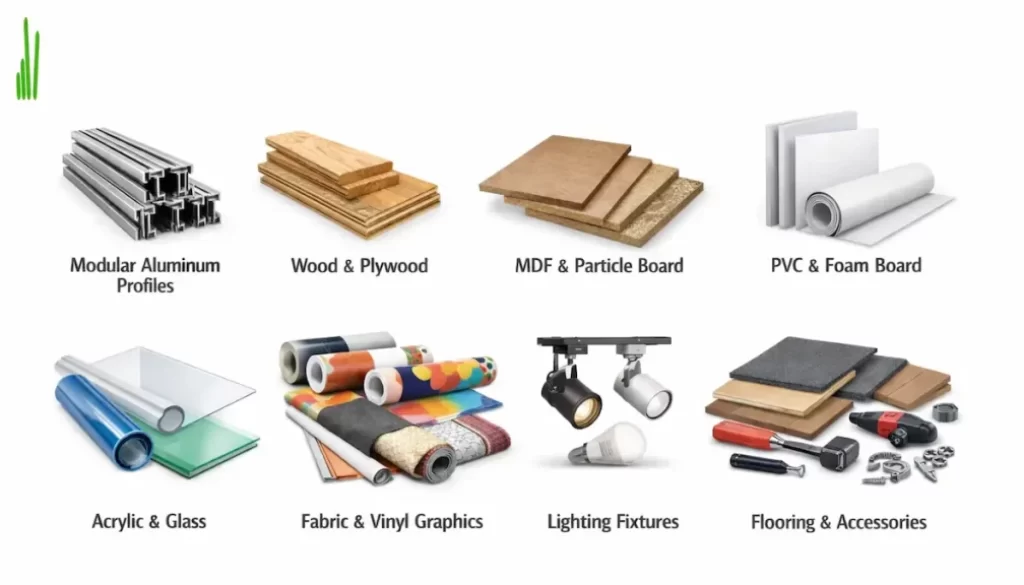
The most common materials used in exhibition stall fabrication are MDF, plywood, aluminum, acrylic, glass, PVC foam boards, fabric graphics, vinyl graphics, and LED display systems. Each material serves a specific purpose depending on the stall design, budget, durability requirements, transportation needs, and whether the exhibition booth will be reused for future events.
For example, plywood is often used for structural strength, aluminum is preferred for reusable modular booths, acrylic creates premium display areas, and fabric graphics help deliver lightweight, high-impact branding.
Why Does Material Selection Matter in Exhibition Stall Fabrication?
Many exhibitors focus heavily on graphics and booth design but underestimate how much material selection influences the final result.
The materials used in an exhibition stall affect:
- Structural stability
- Visual appearance
- Installation time
- Transportation costs
- Reusability
- Maintenance requirements
- Overall project budget
A booth that looks impressive in a 3D design can perform poorly at the event if the wrong materials are selected.
This is why experienced exhibition companies evaluate material performance before production begins.
What Is the Most Common Material Used in Exhibition Stall Fabrication?
For custom exhibition booths, MDF and plywood remain the most widely used materials.
Both offer flexibility, affordability, and compatibility with exhibition graphics.
However, they serve slightly different purposes.
MDF (Medium Density Fiberboard)
MDF is manufactured from compressed wood fibers and provides a smooth surface for painting and laminates.
Best used for:
- Reception counters
- Display shelves
- Branding walls
- Product display units
Advantages:
- Smooth finish
- Affordable
- Easy to shape
- Excellent for painted surfaces
Limitations:
- Heavy
- Less moisture resistant
- Not ideal for repeated transportation
Plywood
Plywood consists of multiple layers of wood veneer bonded together under pressure.
Best used for:
- Structural walls
- Raised platforms
- Large custom booths
- Double-height exhibition structures
Advantages:
- Stronger than MDF
- Better load-bearing capability
- Improved durability
- Better transportation resistance
Limitations:
- Slightly higher cost
- Requires finishing for premium appearance
MDF vs Plywood: Which Is Better for Exhibition Stalls?
One of the most common questions exhibitors ask is whether MDF or plywood is the better option.
The answer depends on the application.
| Feature | MDF | Plywood |
| Cost | Lower | Slightly Higher |
| Surface Finish | Excellent | Good |
| Strength | Medium | High |
| Durability | Medium | High |
| Weight | Heavy | Moderate |
| Reusability | Limited | Better |
| Best Use | Decorative Elements | Structural Components |
Industry Insight
At Peace Media, plywood is typically preferred for larger exhibition structures because it offers better load-bearing performance and withstands transportation more effectively than MDF. MDF is often used for decorative elements where a smooth painted finish is important.
Why Is Aluminum Popular in Modular Exhibition Booths?
Aluminum has become one of the most important materials in modern exhibition systems.
Many modular exhibition stalls are built around aluminum profile frameworks.
Common applications include:
- Modular booths
- Reusable exhibition systems
- Portable trade show displays
- International exhibition stands
Advantages:
- Lightweight
- Corrosion resistant
- Easy transportation
- Fast installation
- Highly reusable
For companies exhibiting multiple times each year, aluminum systems often provide significant long-term savings.
Is Acrylic Better Than Glass for Exhibition Displays?
Both acrylic and glass are commonly used in exhibition environments.
However, they serve slightly different purposes.
Acrylic
Best for:
- Illuminated signage
- Product displays
- Logo elements
- Display cabinets
Advantages:
- Lightweight
- Safer than glass
- Easy fabrication
- Available in multiple colors
Glass
Best for:
- Luxury displays
- Premium showcases
- High-end product presentation
Advantages:
- Premium appearance
- Superior transparency
- High perceived value
In most exhibition environments, acrylic is often chosen because it offers a similar visual effect while reducing weight and transportation risks.
What Materials Are Best for Reusable Exhibition Stalls?
Many exhibitors want booths that can be reused for multiple events.
The most reusable materials include:
- Aluminum frameworks
- Fabric graphics
- Modular display systems
- Acrylic displays
- Reusable flooring systems
These materials help reduce long-term exhibition costs while supporting sustainable event practices.
Which Material Is Cheapest for Exhibition Stall Fabrication?
Budget-conscious exhibitors often ask which materials offer the best value.
Generally:
- PVC Foam Boards
- MDF
- Fabric Graphics
- Vinyl Graphics
are among the most economical options.
However, the cheapest solution is not always the most cost-effective.
Replacing low-quality materials repeatedly can ultimately cost more than investing in durable components.
What Materials Are Used in Premium Exhibition Booths?
Premium exhibition environments typically combine multiple materials.
Common combinations include:
- Aluminum structures
- Acrylic displays
- Glass showcases
- Backlit graphics
- Premium laminates
- LED lighting systems
Luxury brands often prioritize visitor experience and visual impact over minimum-cost fabrication.
Exhibition Stall Material Comparison Table
| Material | Cost | Durability | Reusable | Best Application |
| MDF | Medium | Medium | Limited | Counters & Displays |
| Plywood | Medium | High | Moderate | Structural Walls |
| Aluminum | High | High | Excellent | Modular Booths |
| Acrylic | Medium | Medium | Good | Product Displays |
| Glass | High | High | Good | Premium Showcases |
| PVC Board | Low | Medium | Limited | Signage |
| Fabric Graphics | Low | Medium | Good | Branding Walls |
| Vinyl Graphics | Low | Medium | Limited | Promotional Graphics |
How PeaceMedia Selects Materials for Different Exhibition Projects
At PeaceMedia, material selection is based on project objectives rather than using a standard formula for every booth.
Factors considered include:
- Exhibition duration
- Venue requirements
- Brand positioning
- Budget
- Transportation needs
- Reusability goals
For a luxury product launch, premium materials such as acrylic, glass, and backlit systems may be prioritized.
For an industrial exhibition where durability is critical, plywood and aluminum systems may provide better long-term performance.
With exhibition stall design and fabrication capabilities across Mumbai and major metro cities in India, Peace Media helps businesses choose materials that balance appearance, functionality, and budget.
Frequently Asked Questions
What material is most commonly used in exhibition stalls?
MDF and plywood are the most commonly used materials because they offer flexibility, affordability, and structural reliability.
Is plywood stronger than MDF?
Yes. Plywood generally provides better strength and load-bearing capacity than MDF.
Why is aluminum used in exhibition booths?
Aluminum is lightweight, reusable, corrosion-resistant, and ideal for modular exhibition systems.
Is acrylic better than glass for exhibitions?
In many cases, yes. Acrylic offers a premium appearance while being lighter and safer to transport.
What is the best material for reusable exhibition stalls?
Aluminum frameworks combined with fabric graphics are among the most reusable exhibition solutions available today.
Which material is cheapest for exhibition stall fabrication?
PVC boards, MDF, and fabric graphics are typically among the most budget-friendly options.
Final Thoughts
The materials used in exhibition stall fabrication play a major role in determining a booth’s appearance, durability, cost, and long-term value.
While MDF and plywood remain the foundation of many custom-built exhibition stands, materials such as aluminum, acrylic, fabric graphics, and LED systems are increasingly shaping modern exhibition environments.
The best exhibition stalls rarely rely on a single material. Instead, they combine different materials strategically to achieve the right balance between performance, aesthetics, and budget. For exhibitors looking to maximize ROI, understanding material selection is just as important as choosing the right design.