What Is a Business Exhibition? Everything You Need to Know Before You Exhibit
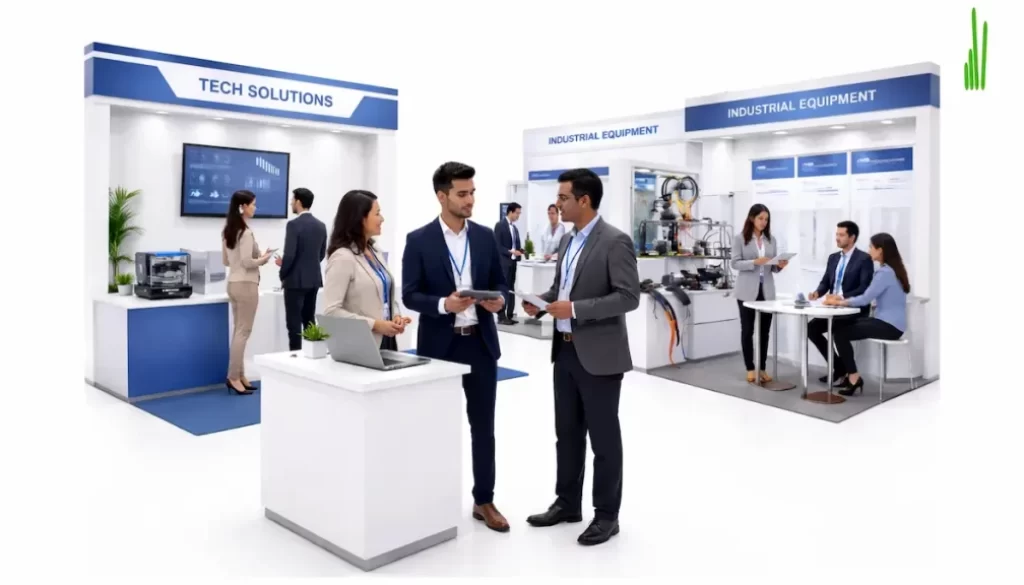
A business exhibition is an organised event where companies showcase their products, services, or brand to a targeted audience including buyers, industry peers, investors, and potential customers — all under one roof.
Introduction
You’ve probably walked past a massive hall full of banners, booths, and people handing out brochures and thought, what exactly is happening here?
That, my friend, is a business exhibition.
And while it might look like controlled chaos from the outside, inside it’s one of the most powerful tools a company can use to grow, connect, and sell.
Whether you’re a small business owner wondering if exhibitions are worth it, a marketing professional planning your next event, or simply someone curious about how business works in the real world — this guide has you covered.
Let’s break it down, simply and honestly.
What Is a Business Exhibition?
A business exhibition (also called a trade show, trade fair, or expo) is a large-scale event where businesses from a specific industry or market come together to display what they offer.
Think of it like this: imagine a marketplace but instead of selling vegetables, companies are showcasing machinery, software, fashion, healthcare products, food brands, real estate, and almost anything else you can think of.
These events can be:
- B2B (Business-to-Business) — where companies sell to other businesses
- B2C (Business-to-Consumer) — where companies interact directly with everyday customers
- Mixed — open to both trade visitors and the general public
The format is usually the same: a large venue (like a convention centre or exhibition hall), rows of booths or “stands,” and companies actively engaging with visitors.
Why Are Business Exhibitions So Important?
Here’s something a lot of people don’t realise: even in the age of social media and digital marketing, face-to-face interactions still convert better than almost any other channel.
A handshake, a product demo, a real conversation these things build trust faster than a hundred emails ever could. And that’s exactly what exhibitions make possible, at scale.
Key Reasons Businesses Attend:
1. Lead Generation
You’re in a room full of people who came specifically because they’re interested in your industry. The leads you collect are already warm, they’re not random internet strangers.
2. Brand Visibility
When your booth is set up next to competitors, you get to show, not just tell, why your brand is better. Your design, your team, your energy, your product quality — it all speaks without you saying a word.
3. Market Research
You can study the competition in real time, see what new products are being launched, what messaging is resonating, and where gaps exist in the market.
4. Networking
Some of the best business partnerships in history started at a trade show. You might meet a supplier, a distributor, an investor, or even your next big client, just by walking the floor.
5. Product Launches
There’s no better place to launch something new than a room full of your exact target audience. The reaction you get live, immediate, unfiltered, is more valuable than any focus group.
Types of Business Exhibitions
Not all exhibitions are the same. Here’s a breakdown of the most common types:
1. Trade Exhibitions (Trade Shows)
These are industry-specific events, usually restricted to trade professionals. For example, a textile trade show would be attended mainly by fabric manufacturers, garment exporters, and fashion buyers, not the general public.
Examples: Auto Expo, India International Trade Fair (IITF), CES (Consumer Electronics Show)
2. Consumer Exhibitions (Public Expos)
These are open to everyone. Think home décor expos, food festivals, or health and wellness expos. The goal here is to reach end consumers directly.
3. Virtual Exhibitions
Since 2020, virtual expos have grown significantly. Businesses create digital booths, host live demos online, and network through video calls. They’re more accessible and can reach a global audience without travel costs.
4. Local or Regional Exhibitions
Smaller, community-focused events are perfect for small businesses and startups. They’re less intimidating and often have very engaged, loyal audiences.
How Does a Business Exhibition Work?
Here’s a simple breakdown of the process, from both sides of the booth:
As an Exhibitor (the company presenting at the event):
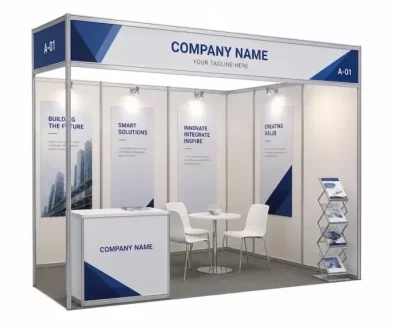
- Register and book your stand — You reserve a space in the exhibition hall, which could be a shell scheme booth or a custom-built stand.
- Design your display — This includes banners, product samples, brochures, screens, and anything that makes your booth attractive and informative.
- Train your team — The people at your booth represent your brand. How they talk, greet visitors, and handle questions matters enormously.
- Engage with visitors — Through demos, freebies, contests, or conversations, you draw people in.
- Collect leads and follow up — Contact details and business cards are gathered and followed up after the event.
As a Visitor (someone attending the event):
- Register or buy a ticket (some events are free, some charge entry)
- Walk through the hall and explore booths
- Attend seminars, panel discussions, or live product demos
- Network and collect information
- Make purchasing decisions or build contacts for future deals
What Does an Exhibition Booth Include?
If you’ve never set one up before, here’s what typically goes into it:
- Backdrop/Banner – Your brand identity and key message, visible from a distance
- Display Table – To show products, brochures, or devices
- Lighting – Good lighting makes a stand look professional and inviting
- Product Samples or Demo Units – So visitors can see or touch what you offer
- Promotional Material – Flyers, catalogues, business cards, branded merchandise
- Lead Capture System – A tablet, form, or QR code to collect visitor information
- Staff – Friendly, knowledgeable people who can answer questions confidently
Business Exhibition vs. Trade Fair vs. Expo – What’s the Difference?
These terms are often used interchangeably, but there are subtle differences:
- Business Exhibition – A broad term for any organised display of products or services for business purposes.
- Trade Fair – Usually industry-specific and B2B focused; buying and selling happen directly on the floor.
- Expo (Exposition) – Larger in scale; can be global (like the World Expo), covering multiple industries or national themes.
For everyday use, all three refer to roughly the same thing – a formal event where businesses come together to present themselves.
Tips to Make the Most of Any Exhibition
Whether you’re exhibiting or just attending, here’s what actually works:
Before the Event:
- Set clear goals – are you there to generate leads, find partners, or launch a product?
- Promote your participation on social media and via email to drive visitors to your booth
- Build your stand around a single, clear message – not everything at once
During the Event:
- Stand in front of your table, not behind it – approachability matters
- Ask open questions instead of pitching right away (“What are you looking to solve right now?”)
- Take notes immediately after conversations – memory fades fast in a busy hall
After the Event:
- Follow up within 48–72 hours while you’re still fresh in people’s minds
- Segment your leads – hot, warm, cold – and tailor your follow-up accordingly
- Review what worked and what didn’t, so your next show is better
Are Business Exhibitions Still Relevant in 2026?
Honestly? Yes – more than ever in some industries.
While digital marketing gets all the attention, many deals in manufacturing, healthcare, real estate, and B2B services still happen because two people met at an expo and built trust over a conversation.
Post-pandemic, exhibitions bounced back strongly. And with the rise of hybrid events – where physical shows are paired with live-streamed content and virtual booths – they’re now reaching both local and global audiences at the same time.
If your competitors are exhibiting and you’re not, they’re building relationships you’re missing out on.
Frequently Asked Questions
What is the purpose of a business exhibition?
The main purpose is to showcase a company’s products or services to a relevant audience — to generate leads, build brand awareness, and network within the industry.
What is the difference between an exhibition and a trade show?
A trade show typically refers to B2B, industry-specific events where buying and selling happen on the floor. An exhibition is a broader term that includes public-facing events, consumer expos, and even art shows.
How do I participate in a business exhibition?
Start by finding events in your industry, contact the organiser, book a booth, prepare your display, train your team, and show up ready to engage. A simple Google search for “[your industry] trade show India 2025” is a good starting point.
Can small businesses benefit from exhibitions?
Absolutely. In fact, smaller businesses often benefit more — because these events give them visibility and credibility that’s hard to build online on a limited budget.
Final Thoughts
A business exhibition is not just an event – it’s an investment in human connection.
In a world that’s increasingly digital, the power of a real conversation, a live product demo, and a genuine exchange still holds tremendous value. These events give you the chance to step out from behind your screen and show the world – and your industry – what you’re made of.
Whether you’re planning to exhibit for the first time or looking to improve your results from past shows, the most important thing is to go in with a plan, a purpose, and the willingness to actually talk to people.
The booth is just the beginning.
See More : What Is a Stall Design?